
Buy Custom Printed Mylar Bags in the UK for Your Business
When customers come across your product, the packaging is often the first thing they notice. A well-designed bag can make
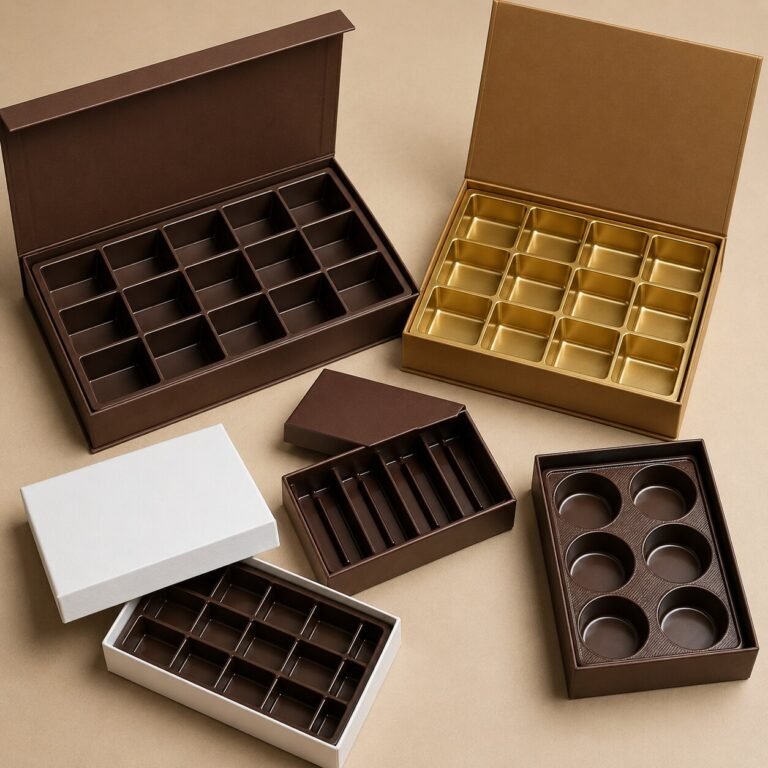
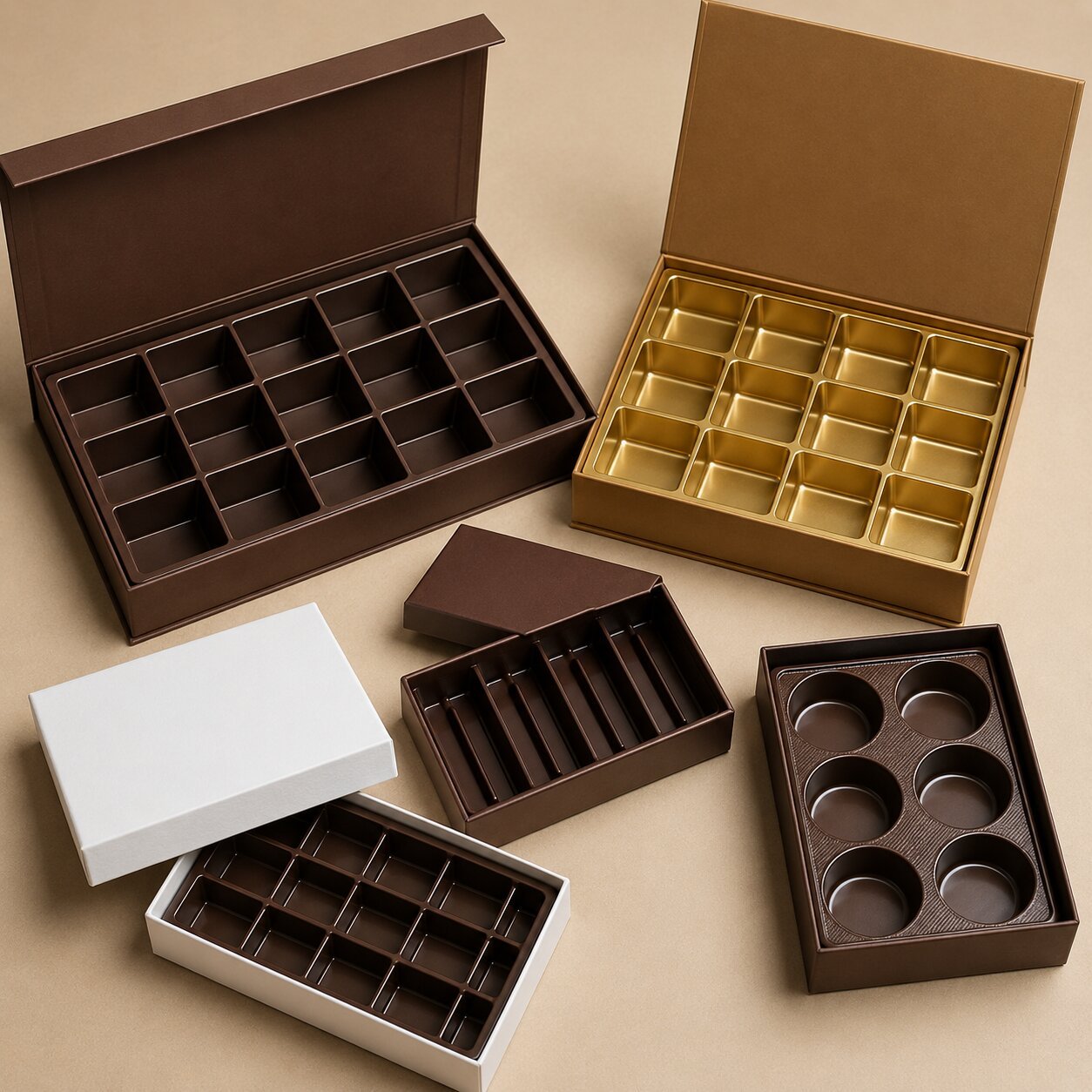
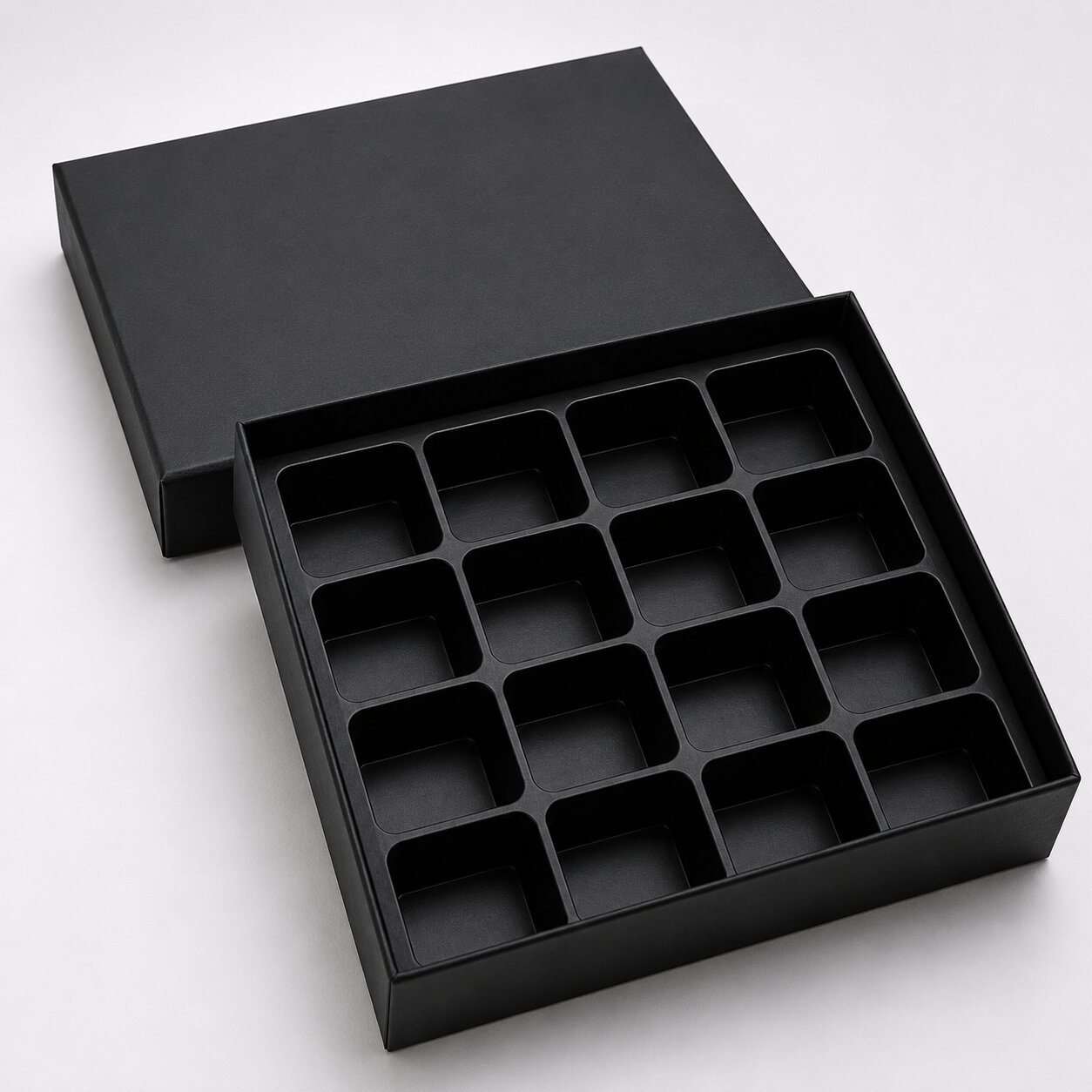
Empty chocolate boxes with inserts are made up of an outer box with a tray inside that keeps chocolate separate, protected, and beautifully presented. They’re very popular with chocolatiers, bakeries, hospitality companies, and gifting companies as they keep the chocolate from breaking, guarantee hygiene by keeping the flavors from mixing, and enhance the customer’s experience of unboxing their package. Available in kraft paperboard, rigid cardboard, corrugated board, and molded pulp, these boxes can have a cavity count from 4 to 24 to fit different assortments. When coupled with printed boxes with logos, colors, and superior finishes, these boxes become a powerful tool that helps brands gain trust, recognition, and deliver a memorable gift with each order.
Button 1
Button 2



Empty chocolate boxes with inserts are boxes containing an outer box and a tray inside that holds individual chocolate pieces separated so they can be safely packaged and presentable. Empty chocolate boxes with inserts are used by chocolatiers, bakeries, gift manufacturers, and retailers who need to ensure their chocolates are protected while being shipped and unpacked.
The topics of the guide cover the most commonly asked questions, with an answer at the beginning of each section and more detail.
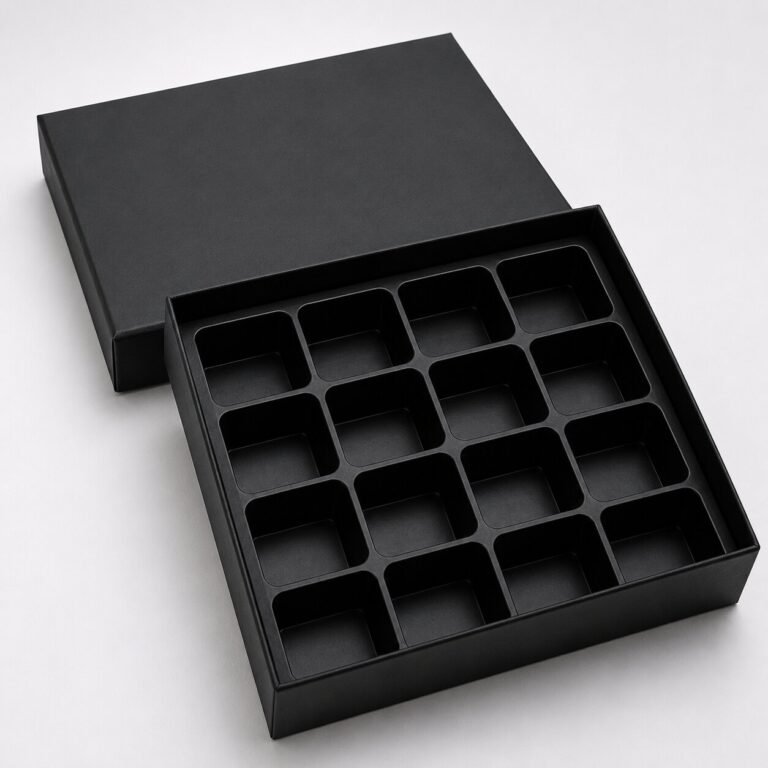
Empty chocolate boxes with inserts are boxes that have a protective outer covering and an inner tray that is either cardboard, kraft paper, or molded pulp. The insert has compartments that can each hold a piece of chocolate. Since these boxes come empty, businesses can fill them with their own chocolates, truffles, pralines, or confections without worrying about the pieces moving, cracking, or touching when they are stored or transported.
This type of packaging is used by bakeries, home-based chocolatiers, hotels, corporate gifting companies, and wedding favor providers. Not only does it hold the chocolate securely, it creates a gallery-style look to each piece that seems intentional and high-quality.
Inserts are key to a hygienic product presentation. They prevent chocolate from moving, touching, or breaking in the box, and they neaten the look of the product once it’s opened. Inserts address three major issues: protection, hygiene, and presentation.
First, it prevents damage. Chocolate is fragile; it can change its form easily if it’s heated or moved during shipping. A securely-fitted insert will keep each piece firmly in place and less likely to break or melt.
Second, it improves hygiene. The containers keep chocolates from touching each other, which is not only good for the food but also prevents that different flavors in different refills from coming together.
Third, the product looks more appealing. It’s very helpful when customers open boxes and see the chocolates neatly organized in slots on the outside of the box. This is especially true for gifting occasions such as weddings, holidays or corporate functions, where unboxing is often as important as the product itself.
The most common materials are kraft paperboard, rigid cardboard, corrugated board, molded pulp, and clear PET plastic, with the choice depending on the brand’s budget, sustainability goals, and desired presentation. Below is a breakdown of each option:
The choice of material usually depends on the brand’s positioning. Businesses focused on sustainability often prefer molded pulp trays, while premium gifting brands may lean toward rigid boxes with velvet-textured or foil-stamped finishes.
Chocolate box inserts commonly range from 4 to 24 compartments, with the exact count depending on chocolate size, box dimensions, and whether the packaging is meant for gifting or bulk retail. Common formats include:
Many suppliers also offer fully custom insert tooling, allowing a business to match the tray shape precisely to its chocolate molds. This reduces movement inside the box and creates a tighter, more polished look.
Printed packaging is important because it helps create a brand ambassador from a plain box, building trust and recall before the customer even tastes the product. White empty boxes with inserts are usually sold as neutral but printed packaging is important as it enhances the brand image. A printed box transforms a generic container into a recognizable brand object. Logos, brand colors, taglines, and finishes such as matte lamination, spot UV, or foil stamping make a product feel premium and trusted prior to the customer even tasting it.
For example, the printed packaging uses printed boxes and inserts in chocolate for every order, so it feels consistent, professional, and instantly identifiable whether the product is sold in-store or shipped directly to a customer’s door. This type of consistency builds trust over time, especially when the gifting is for repeat occasions such as anniversaries, holidays, or corporate appreciation gifts.
Packaging needs to be visually pleasing in addition to being promotional, as customers may even share the moment they unbox their product on social media. A properly designed box with a clean insert will help to promote your brand organically, especially in the gifting and dessert industries.
Yes, empty chocolate boxes with inserts are highly customizable, covering box shape, insert cavity design, printing, finishing, and add-ons. Most manufacturers allow customization across the following dimensions:
This flexibility means small businesses and large manufacturers alike can order packaging that fits their exact product line, rather than adapting their chocolates to fit a generic box.
Buyers of this packaging type range from home-based chocolatiers to large-scale manufacturers, hospitality brands, and e-commerce sellers, each prioritizing different features such as branding, durability, or cost. The main buyer groups include:
Each of these buyers has slightly different priorities. E-commerce sellers often prioritize shipping durability, while boutique chocolatiers may prioritize visual presentation and branding.
A business needs to consider size and shape of chocolate, the number of pieces per box, how the chocolate is being shipped, and branding objectives. Packaging is a matter of durability and cost. A business that ships nationally will need stronger board and more tightly-packed inserts than a smaller business that only sells in a local storefront. A premium gift business will benefit from rigid boxes printed on the outside and kraft cardboard on the inside.
Empty chocolate boxes with inserts serve as more than boxes. They protect the products, simplify the process of unpacking, and when paired with printed boxes, they become an extension of the brand. Whether you are a small home-based chocolatier or a large confectionery manufacturer, choosing the right combination of box and insert is important, not only for what you sell to your customers but also for how they perceive quality, care, and professionalism on each purchase. Read more: Custom Vape Boxes
| DIMENSIONS | All Custom Sizes & designs are Available. |
| PRINTING | Plain Box In Any Custom Color, CMYK Printing, Pantone Color Matching. |
| PAPER STOCK | 10pt to 28pt (60lb to 400lb) Eco-Friendly Kraft, E-flute Corrugated, Bux Board, Card Material. |
| QUANTITIES | 50 quantity to unlimited quantity. |
| COATING | Gloss Shiny, Matte Dull Look, Spot Shiny UV. |
| DEFAULT PROCESS | Die Cutting, Gluing, Scoring, Perforation ( If Required ). |
| OPTIONS | Custom Shape Window Cut Out In Any Custom Size/Style, Hot Foil Stamping in Any Color, Embossing/Debossing, Raised Ink, PVC Sheet. |
| PROOF | 2D Flat View, 3D Mock-up In PDF Format, Physical Sampling (On Demand At Little Cost). |
| TURNAROUND TIME | 6-8 Business/Working Days, Urgent Delivery Also Available. |
Need assistance? Reach out for a consultation—our experts are ready to guide you. Whether you have questions, ideas, or concerns, we’re here to provide personalized support. Upgrade your experience with customized solutions through our responsive consultation services!


EXCELLENTTrustindex verifies that the original source of the review is Google. I can not speak highly enough of Muhammad and his team! From receiving my initial order enquiry - to discussing options in my best interests - sending digital proofs - to receiving the items was absolutely seamless! The customer service reiceved was what I'd call genuine and old school, they really do go out of their way to deliver on all fronts. I've placed 2 orders with the company in quick succession, I have more orders to place and will not hesitate to refer to family friends and business associates!


When customers come across your product, the packaging is often the first thing they notice. A well-designed bag can make
We don’t think everyone wants to see their online purchases when the parcel arrives at their door. Some items are