
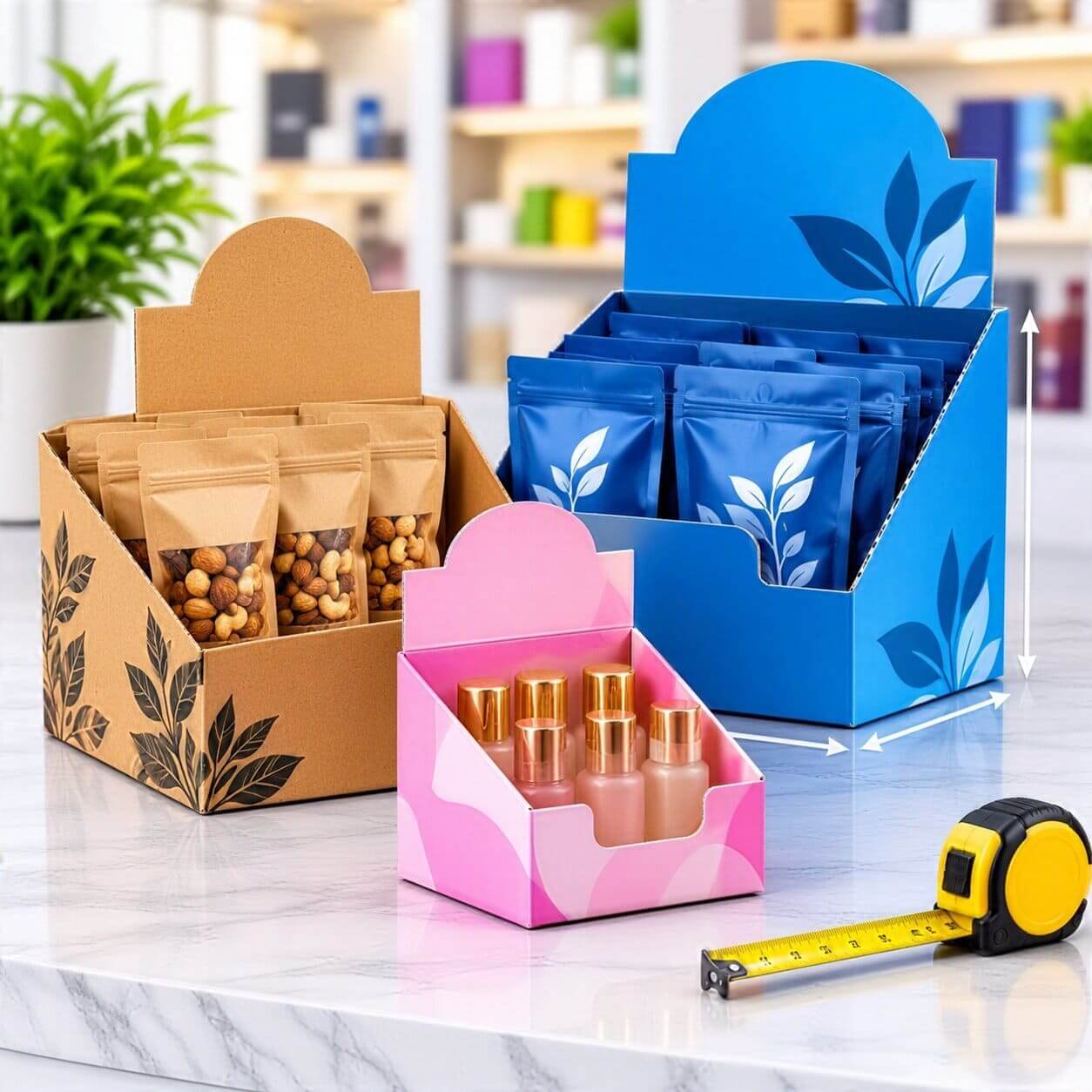
Small things might seem like small things, but they can make a big difference to the look of your products on shelves. A perfectly sized display box keeps your products organized, makes them easier to find and makes your products stand out as the first impression your customer gets. On the other hand, packaging that’s too large or too small will negatively affect both presentation and accessibility.
Understanding Custom Display Boxes Sizes and Dimensions is therefore key to businesses who want practical and attractive packaging for their products. Whether you’re selling cosmetics, chocolates, skin care products or other small products, knowing the right dimensions will help you choose the perfect display for your products and available space.
The flexibility of a custom-made display box is exciting for both retailers and product manufacturers in the UK. You can specify the size, structure and design as per your own requirements, rather than attempting to fit your products into a box that doesn’t quite fit.
Why Does Choosing the Right Display Box Size Matter?
Imagine walking into a shop and seeing everything neatly arranged in attractive display boxes. Everything looks organised, and customers can easily pick up what they need. That’s exactly the goal of good display packaging.
The size of the box is not only relevant to its appearance, but it also influences the products inside, how much space is occupied by the display and how easy it is to use for customers.
Voice queue-jumps des reasons why the correct size matters:
- Product arrangement: The products appear arranged rather than scuffed and dispersed.
- Better shelf presentation: Good dimensions allow for a professional appearance on the retail shelf.
- Accessibility: Customers can pick up products without lifting the packaging.
- Less wasted space: Because our boxes are custom-sized, companies don’t have to cram too many boxes in their boxes.
- Improved protection: An ideal fit prevents your product from swaying.
This information is important to retailers and customers alike.
What Are the Standard Sizes of Custom Display Boxes?
There isn’t one size that works for all display boxes. Different items may need different amounts of space and the sizes in the end will depend on the type of packaging and its intended use.
However, the following measurements can help businesses understand common sizing options.
| Display box type | Example dimensions (L × W × H) |
| Small counter display | 150 × 100 × 100 mm |
| Medium counter display | 200 × 150 × 150 mm |
| Large counter display | 300 × 200 × 200 mm |
| Retail shelf display | 300 × 200 × 150 mm |
| Promotional display | 250 × 180 × 120 mm |
These are a few example sizes and are not industry standards. Check the size of your actual box to make sure you have space available for the quantity and size of products you want to display.
A smaller box may be just right for lip balms or mini skincare products while a bigger one might be ideal for chocolates, snack bags or larger retail items.
How Do You Measure Products for Custom Display Boxes?
Before you order packaging, spend a bit of time measuring the product. You’ll save time and money when you order the wrong size.
There are three main measures to consider.
Length: Measure the longest horizontal side of your product. This is how much room you need across the box.
Width: Measure the shorter horizontal side. This is particularly important when placing several products next to each other.
Height: Measure the product from the base to the highest point of the product, to determine how tall or deep the display box needs to be.
After you have measured these items, imagine how the products will be stored. Will they be in one row, or multiple rows? Or will they be stored separately?
You should also give the customer room to move the products around easily. A box that is too tight may look nice at first, but can become a hassle when shoppers have to pick it up.
Which Types of Display Boxes Can You Choose?
Different display styles are better for different products and retail environments. Knowing the available options will help you choose the best design.
Counter Display Boxes
You may also find counter display boxes near the checkouts of supermarkets, convenience stores and independent shops. These boxes are ideal for small products such as sweets, lip balms, cosmetics and accessories.
The small size means businesses can make the most of limited counter space, leaving plenty of room for branding and product information.
Shelf Display Boxes
Shelf display boxes are designed to sit on shelf units in stores. They hold products together and help customers find what they need.
Displays should be the same size as the shelf space available. You should also consider the height of the shelves so the display does not obscure products or make items difficult to access.
Floor Display Boxes
Floor display boxes are larger boxes placed on the floor of a shop in which customers can place their seasonal promotions, new products or special offers.
Plus, as these larger displays can hold more products, their construction needs to be strong. For these display cases, corrugated cardboard is popular.
Dump Display Boxes
Dump boxes have an open top design that allows customers to browse their products. You’ll find them in shops selling sweets, toys, accessories and promotions.
The depth of the display should be suitable for the products which are to be shown, and the opening must be open so that your products can be easily reached.
What Materials Are Best for Display Packaging?
Depending on the material you choose, your packaging will look good, it will be durable and it will perform well.
Corrugated cardboard is suitable for larger displays that need stronger support. The layered structure of the cardboard makes it ideal for carrying heavier goods.
Folding box board is also suitable for packaging lightweight products and colourful retail products as it has a smooth surface that allows high-quality printing.
As a result, it provides a richer, premium feel, and is often used for luxury product presentations where appearance is as important as function.
Consider the weight of the product, its location in the display environment, and how often it will be handled.
What Should You Consider Before Ordering Custom Display Boxes?
The size you want to achieve from your packaging is not just about measuring the product and picking a box, but also about how it will work in a retail environment.
Observe these points:
- Measure products in their final retail packaging.
- Decide how many boxes each display area should hold.
- The best time to get started is when you measure the space on the counters and shelves.
- Make sure customers can see and reach the products easily.
- Choose a material that can support the weight of the product.
- Leave plenty of space for the printing of branding and product information.
- You may request a sample before approving a large order.
If your company offers different sizes of products, you may want to have a variety of box sizes and similar design so that your packaging is instantly recognisable and your products don’t all fit in the same box.
How Can Custom Display Boxes Improve Your Brand Image?
Good packaging is about more than keeping your products together; it helps your customers recognise your brand and makes a bigger impression at the point of sale.
Customers and organisations can add their logos, colours, product names and marketing information to custom printed packaging. Finishing options such as matte lamination, gloss coating or spot UV can give the packaging a quality look.
There are a number of other aspects to consider, and the overall layout does matter. A display case with the right size and style for the products actually looks more professional and the whole retail situation feels organised.
Working with The Printed Packaging allows businesses to investigate different display box sizes, materials and printing options depending on their packaging needs.
Final Thoughts
With the right Custom Display Boxes Sizes and Dimensions, you don’t have to be a pro! Start by measuring your products, think about where the boxes will be placed and try to choose a way that makes products easy to access.
Whether you want small boxes for the counter, shelves or floor-standing displays, the right size can help you make better use of retail space.
End of the day, good display packaging should look attractive, work properly and make shopping easier. These three components make up the third ingredient in your packaging making you a valuable part of your retail experience overall.